Catalog intake and source staging
Map CSV and XLSX fields, check each row, import in the background, preserve source history, and review changes in one path.
Product
Bring catalog uploads, product details, human review, quality checks, and sales-channel requirements together. An AI draft never becomes approved product data on its own.
End-to-end product
Map CSV and XLSX fields, check each row, import in the background, preserve source history, and review changes in one path.
Products, variants, assets, attributes, source history, edits, and approvals remain reviewable inside the workspace.
AI drafts structured product content with confidence. Your team accepts, edits, or rejects every value before it becomes approved product data.
Check product pages (PDPs) and assets beside channel requirements, keeping missing content and blockers visible before publishing.
Prepare CSV and JSON exports or publish approved updates back to your store, with per-item results kept explicit.
Catalog quality, source health, freshness, review progress, readiness, and blockers are aggregated without exposing HQ commercial or provider diagnostics.
Visual Search, Shop Similar, Outfit Graph, Shop-the-Look, and styling briefs help merchandisers explore and review product relationships.
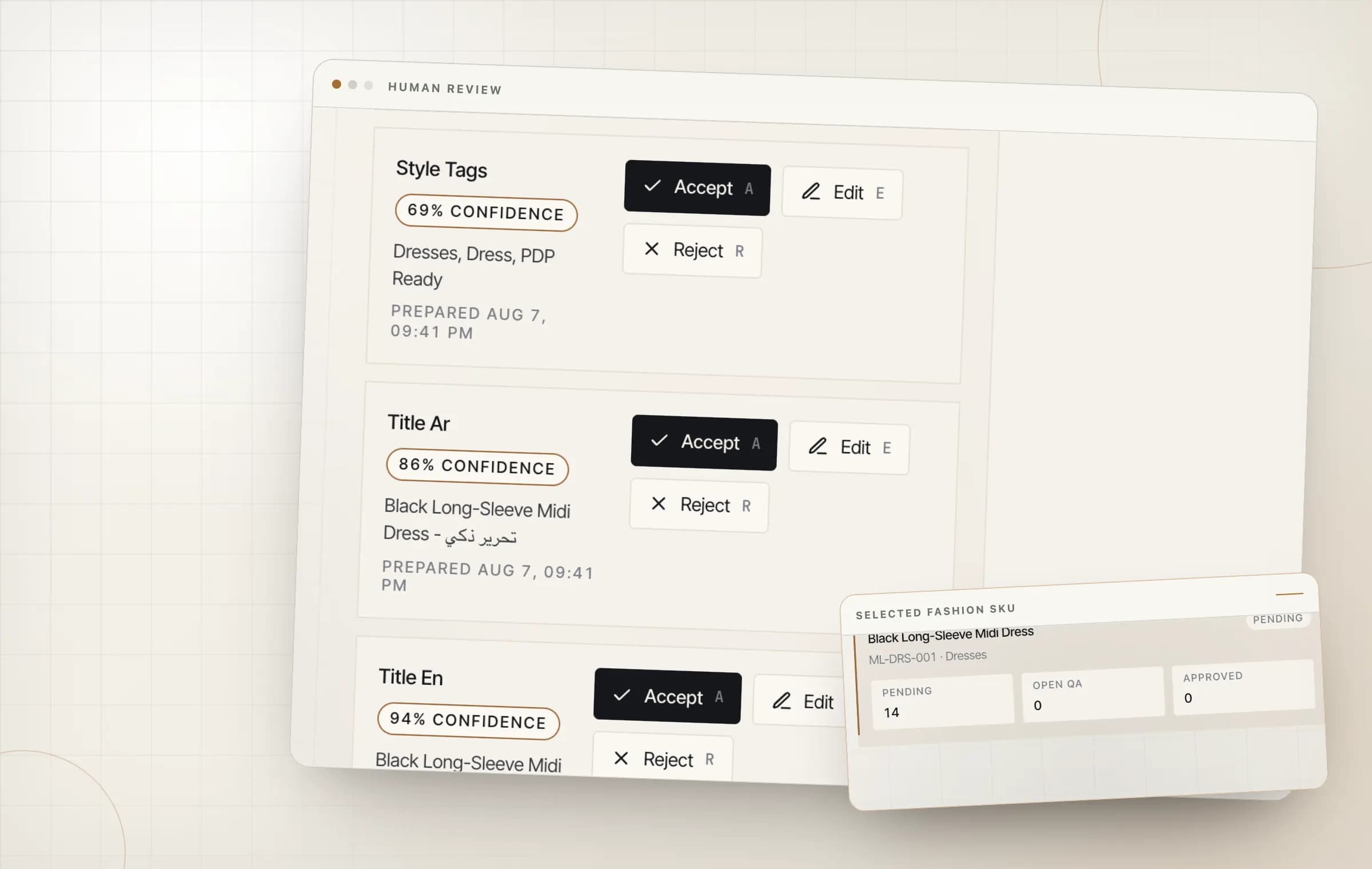
Decision signals
Tessaire keeps suggestion confidence separate from the requirements that determine whether a product is ready for its next channel.
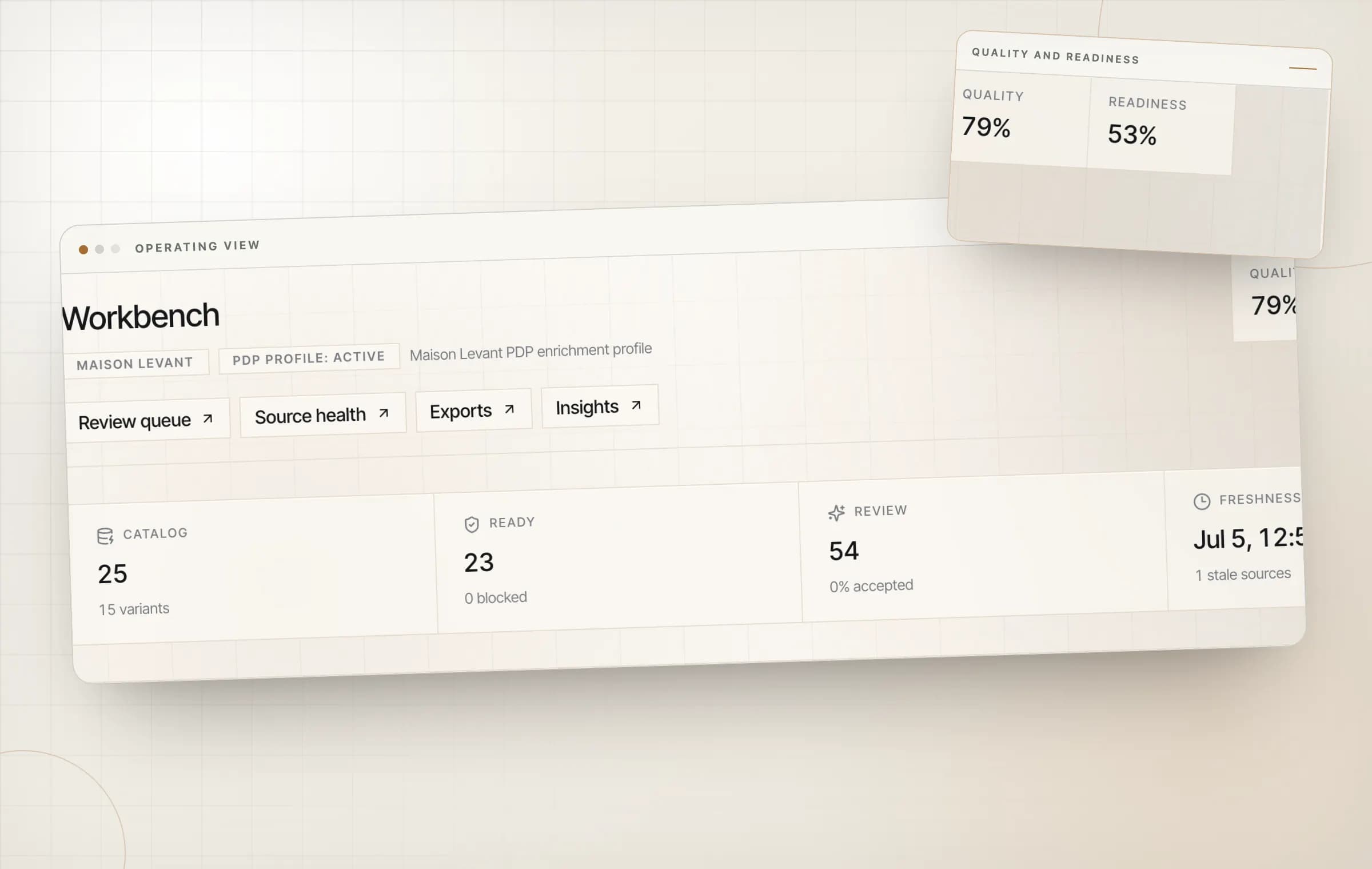
Operating model
The workflow view shows where validation, review, approval, staging, and explicit external boundaries enter the sequence.